Cost Across Time [INFOGRAPHIC]

Cost Across Time [INFOGRAPHIC] | Simplifying The Market

Cost Across Time [INFOGRAPHIC] | Simplifying The Market

Some Highlights:

  • With interest rates still around 4.5%, now is a great time to look back at where rates have been over the last 40 years.
  • Rates are projected to climb to 5.1% by this time next year according to Freddie Mac.
  • The impact your interest rate makes on your monthly mortgage cost is significant!
  • Lock in a low rate now while you can!

Powered by WPeMatico

Read more

Homes More Affordable Today than 1985-2000

Homes More Affordable Today than 1985-2000 | Simplifying The Market

Rising home prices have many concerned that the average family will no longer be able to afford the most precious piece of the American Dream – their own home.

However, it is not just the price of a home that determines its affordability. The monthly cost of a home is determined by the price and the interest rate on the mortgage used to purchase it.

Today, mortgage interest rates stand at about 4.5%. The average annual mortgage interest rate from 1985 to 2000 was almost double that number, at 8.92%. When comparing affordability of homeownership over the decades, we must also realize that incomes have increased.

This is why most indexes use the percentage of median income required to make monthly mortgage payments on a typical home as the point of comparison.

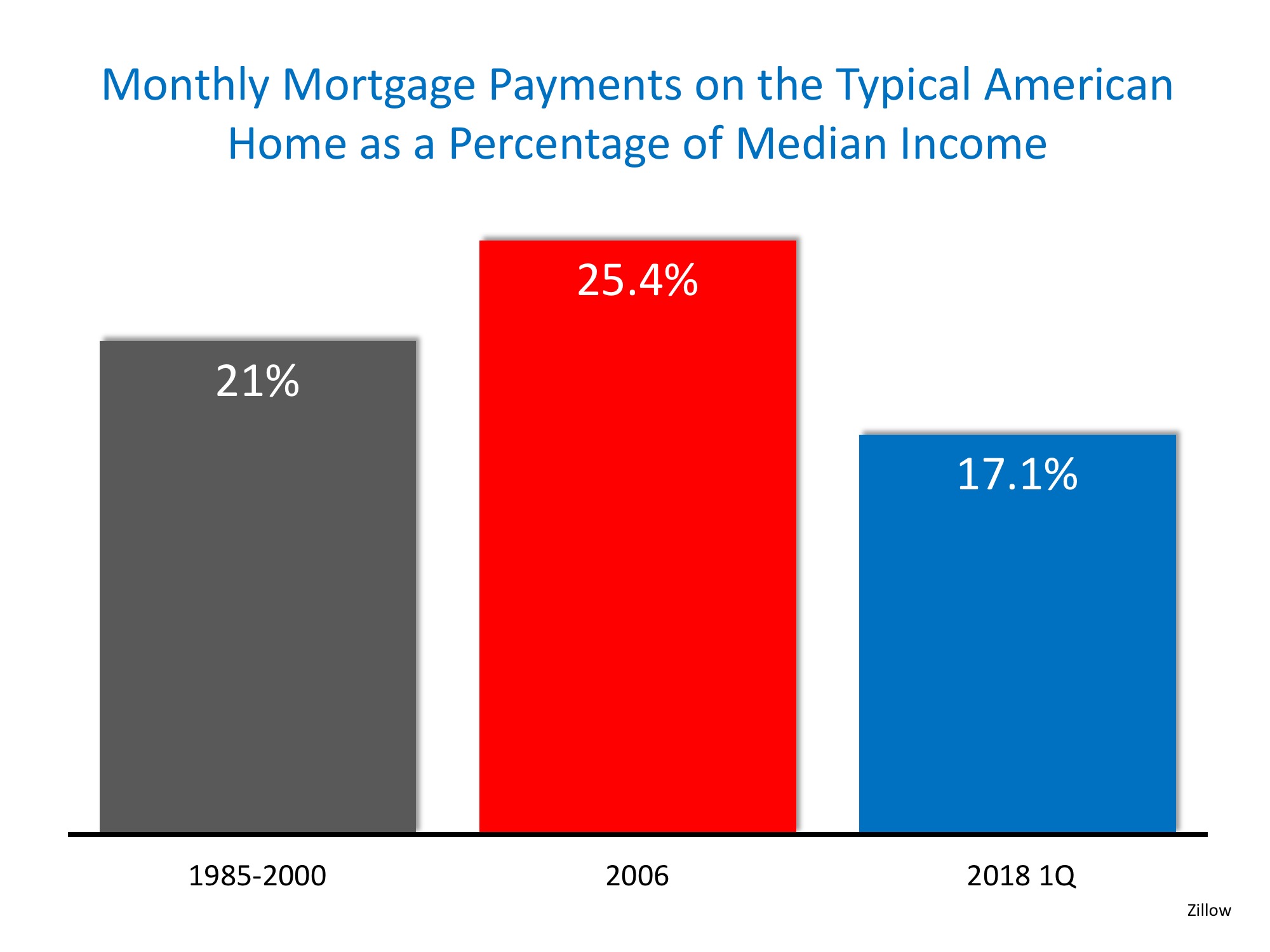
Zillow recently released a report comparing home affordability over the decades using this formula. The report revealed that, though homes are less affordable this year than last year, they are more affordable today (17.1%) than they were between 1985-2000 (21%). Additionally, homes are more affordable now than at the peak of the housing bubble in 2006 (25.4%). Here is a chart of these findings:

Homes More Affordable Today than 1985-2000 | Simplifying The Market

What will happen when mortgage interest rates rise?

Most experts think that the mortgage interest rate will increase to about 5% by year’s end. How will that impact affordability? Zillow also covered this in their report:

Homes More Affordable Today than 1985-2000 | Simplifying The Market

Rates would need to approach 6% before homes became less affordable than they had been historically.

Bottom Line

Though homes are less affordable today than they were last year, they are still a great purchase while interest rates are below the 6% mark.

Powered by WPeMatico

Read more

VA Loans: Making a Home for the Brave Possible

VA Loans: Making a Home for the Brave Possible | Simplifying The Market

Since the creation of the Veterans Affairs (VA) Home Loans Program, over 22 million veterans have achieved the American Dream of homeownership. Many veterans do not know the details of the program and therefore do not take advantage of the benefits available to them.

If you are a veteran or you know someone who is, here is a breakdown of the VA Home Loan benefits that can be used to achieve the American Dream!

Top 5 Benefits of a VA Home Loan

  1. The greatest benefit of a VA Loan is that borrowers can buy a home with a 0% down payment. In 2016, 82% of all VA Loans put down 0%!
  2. Primary Mortgage Insurance (PMI) is not required! (Most other loans with down payments under 20% require PMI, which adds additional costs to your monthly housing expense!)
  3. Credit Score requirements are also lower for VA Home Loans. The average FICO® score of a borrower for an approved VA Loan is 620, compared to 676 (FHA) or 753 (Conventional).
  4. There is also a limitation on a veteran buyer’s closing costs. Sellers can pay all of a buyer’s loan-related closing costs and up to 4% in concessions in some cases.
  5. Even with interest rates rising, VA Loans continue to have the lowest average interest rates of all loan types.

Who Qualifies for a VA Home Loan?

One of the most important first steps when applying for a VA Home Loan is obtaining your Certificate of Eligibility (COE). “The COE verifies to the lender that you are eligible for a VA-backed loan.”

You Can Apply for a VA Loan if You:

  • Serve 90 consecutive days during wartime
  • Serve 181 consecutive days during peacetime
  • Have more than 6 years in the National Guard or Reserves
  • Are the spouse of a service member who has died in the line of duty or as the result of a service-related disability

You Can Use a VA Loan To:

  • Purchase a Home
  • Purchase a Condo
  • Build a Home
  • Refinance an existing home loan
  • Make improvements to a home by installing energy-related features or making energy-efficient improvements

Bottom Line

For more information or to find out if you or a loved one would qualify to use the VA Home Loan Benefit, let’s get together! Thank you for your service!

Powered by WPeMatico

Read more

Why Should You Use A Professional to Sell Your Home?

Why Should You Use A Professional to Sell Your Home? | Simplifying The Market

When homeowners decide to sell their houses, they obviously want to get the best possible price for their home with the least amount of hassles along the way. However, for the vast majority of sellers, the most important result is actually getting their homes sold.

In order to accomplish all three goals, a seller should realize the importance of using a real estate professional. We realize that technology has changed a buyer’s behavior during the home buying process. According to the National Association of Realtors’ 2018 Home Buyer & Seller Generational Trends Report, the first step that “42% of recent buyers took in the home buying process was to look online at properties for sale.”

However, the report also revealed that 94% of buyers who used the internet when searching for homes ultimately purchased their homes through either a real estate agent/broker or from a builder or builder’s agent. Only 2% of buyers purchased their homes directly from a seller whom they didn’t know.

Buyers search for a home online but then depend on an agent to find the home they will buy (52%), to negotiate the terms of the sale (47%) & price (38%), or to help understand the process (60%).

The plethora of information now available has resulted in an increase in the percentage of buyers who reach out to real estate professionals to “connect the dots.” This is obvious, as the percentage of overall buyers who have used agents to buy their homes has steadily increased from 69% in 2001.

Bottom Line

If you are thinking of selling your home, don’t underestimate the role a real estate professional can play in the process.

Powered by WPeMatico

Read more

Buying This Summer? Be Prepared for Bidding Wars

Buying This Summer? Be Prepared for Bidding Wars | Simplifying The Market

Summer is traditionally a busy season for real estate. Buyers come out in force and homeowners list their houses for sale hoping to capitalize on those buyers who are looking to purchase before the new school year. This year will be no different!

Buyers have already been out in force looking for their dream homes and more are on their way. The challenge is that the inventory of homes for sale has not kept up with demand, which has led to A LOT of competition for the homes that are available.

A recent article by the National Association of Realtors touched on the current market conditions:

“Realtors® in areas with strong job markets report that consumer frustration is rising. Home shoppers are increasingly struggling to find an affordable property to buy, and the prevalence of multiple bids is pushing prices further out of reach.”

Realtor.com went on to explain why buyers are flocking to the market in such big numbers:

“A booming economy and stable employment in most parts of the country have created a new generation of eager home buyers – and led to fevered price battles spilling over into some unexpected, smaller markets.”

Javier Vivas, Director of Economic Research for Realtor.com had this to say about competition:

Multiple-offer scenarios are no longer reserved to the usual big, fast-moving markets…demand for homes has spilled outward into secondary, smaller markets, and more buyers are gearing up to face fierce competition in more places around the country.”

Realtor.com looked at the number of homes that were selling above asking price to determine which markets were heating up. Below are the Top 10:

  • Akron, OH
  • Worcester, MA
  • Lexington, KY
  • Irvine, CA
  • Greensboro, NC
  • Sioux Falls, SD
  • Madison, WI
  • Louisville, KY
  • Tacoma, WA
  • Little Rock, AR

Bottom Line

Let’s get together to discuss our exact market conditions so that we can help you create a strategy to secure your new home in this competitive atmosphere!

Powered by WPeMatico

Read more

5 Reasons Millennials Choose to Buy a Home [INFOGRAPHIC]

5 Reasons Millennials Choose to Buy a Home [INFOGRAPHIC] | Simplifying The Market

Some Highlights:

  • “The majority of millennials said they consider owning a home more sensible than renting for both financial and lifestyle reasons — including control of living space, flexibility in future decisions, privacy and security, and living in a nice home.”
  • The top reason millennials choose to buy is to have control over their living space, at 93%.
  • Many millennials who rent a home or apartment prior to buying their own homes dream of the day when they will be able to paint the walls whatever color they’d like or renovate an outdated part of their living space.

Powered by WPeMatico

Read more

Next Recession in 2020? What Will Be the Impact?

Next Recession in 2020? What Will Be the Impact? | Simplifying The Market

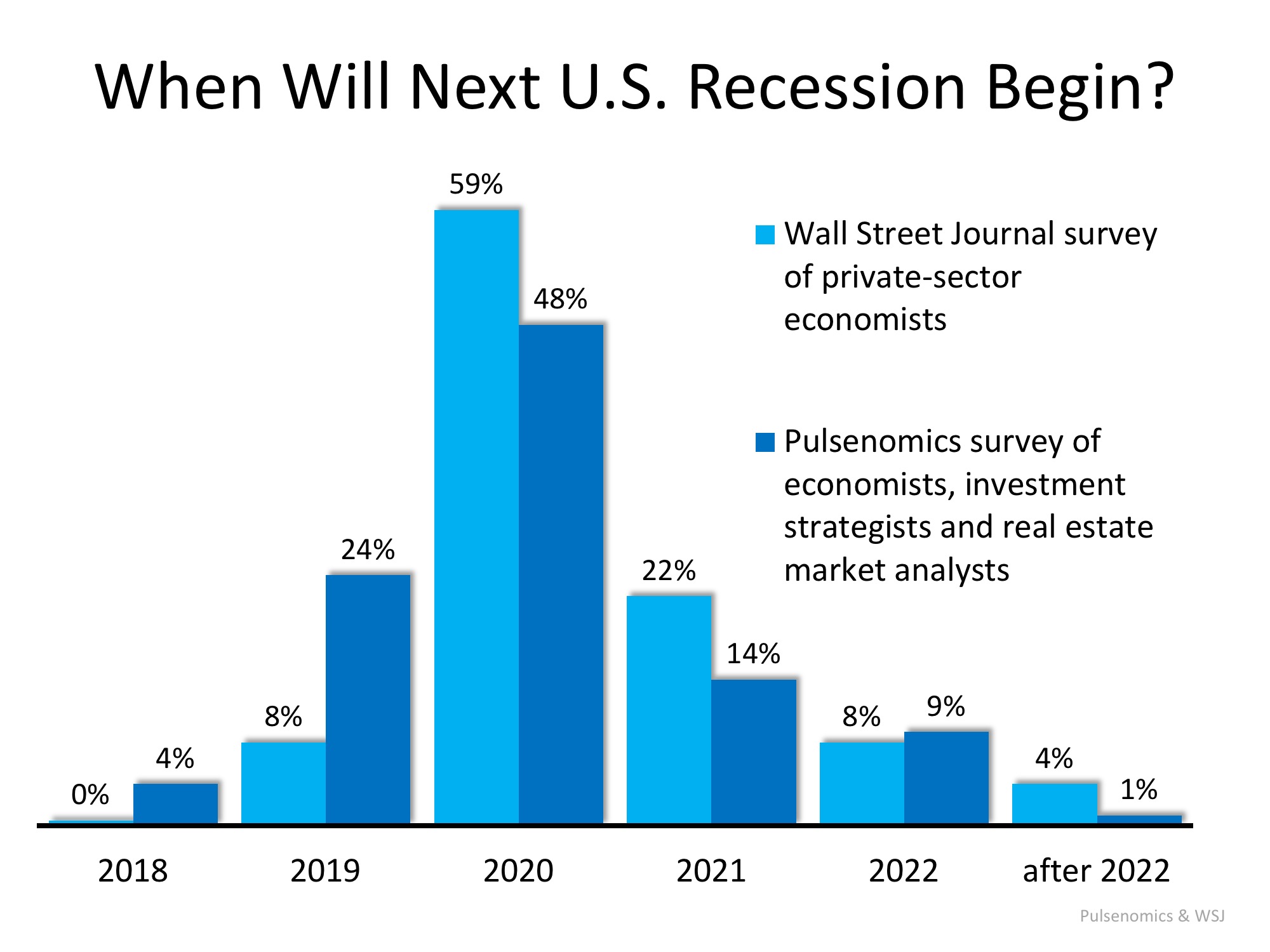
Economists and analysts know that the country has experienced economic growth for almost a decade. They also know that a recession can’t be too far off. A recent report by Zillow Research shed light on a survey conducted by Pulsenomics in which they asked economists, investment strategists and market analysts how they felt about the current housing market. That report revealed the possible timing of the next recession:

Experts largely expect the next recession to begin in 2020.”

That timing concurs with a recent survey of economists by the Wall Street Journal:

“The economic expansion that began in mid-2009 and already ranks as the second-longest in American history most likely will end in 2020 as the Federal Reserve raises interest rates to cool off an overheating economy, according to forecasters surveyed.”

Here is a graph comparing the opinions of those surveyed by both the Wall Street Journal and Pulsenomics:

Next Recession in 2020? What Will Be the Impact? | Simplifying The Market

Recession DOES NOT Equal Housing Crisis

According to the Merriam-Webster Dictionary, a recession is defined as follows:

“A period of temporary economic decline during which trade and industrial activity are reduced, generally identified by a fall in GDP in two successive quarters.”

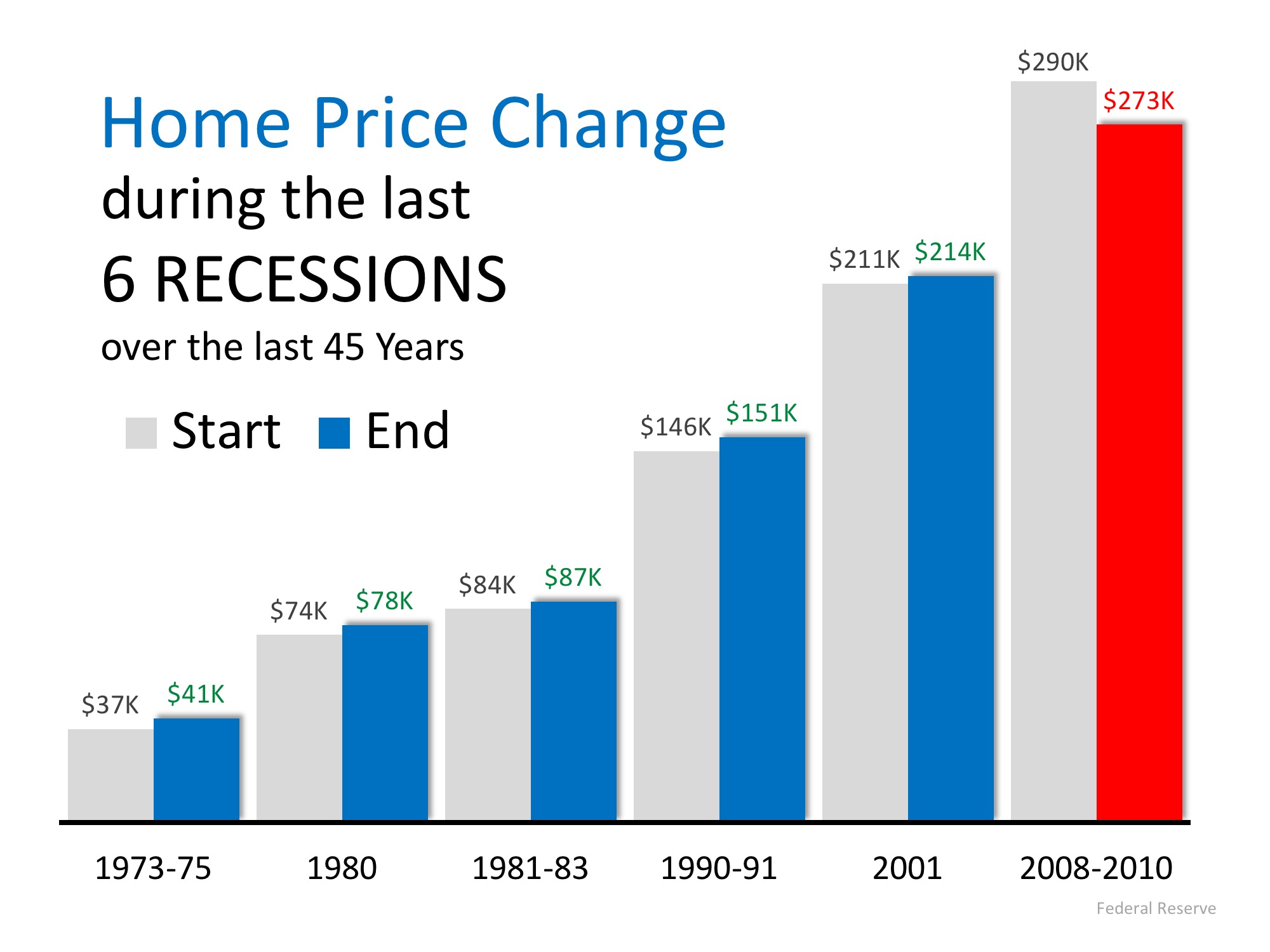
A recession means the economy has slowed down markedly. It does not mean we are experiencing another housing crisis. Obviously, the housing crash of 2008 caused the last recession. However, during the previous five recessions home values appreciated.

Next Recession in 2020? What Will Be the Impact? | Simplifying The Market

According to the experts surveyed by Pulsenomics, the top three probable triggers for the next recession are:

  • Monetary policy
  • Trade policy
  • A stock market correction

A housing market correction was ranked ninth in probability. Those same experts also projected that home values would continue to appreciate in 2019, 2020, 2021 and 2022.  

Others agree that housing will not be impacted like it was a decade ago.

Mark Fleming, First American’s Chief Economist, explained:

“If a recession is to occur, it is unlikely to be caused by housing-related activity, and therefore the housing sector should be one of the leading sources to come out of the recession.”

And U.S. News and World Report agreed:

“Fortunately – and hopefully – the history of recessions and current issues that could harm the economy don’t lead many to believe the housing market crash will repeat itself in an upcoming decline.”

Bottom Line

A recession is probably less than two years away. A housing crisis is not.

Powered by WPeMatico

Read more

What’s the Median Home Value in Your State?

What’s the Median Home Value in Your State? | Simplifying The Market

If you’ve entered the real estate market as a buyer or a seller, you’ve inevitably heard the mantra “location, location, location” in reference to identical homes increasing or decreasing in value based on where they’re located.

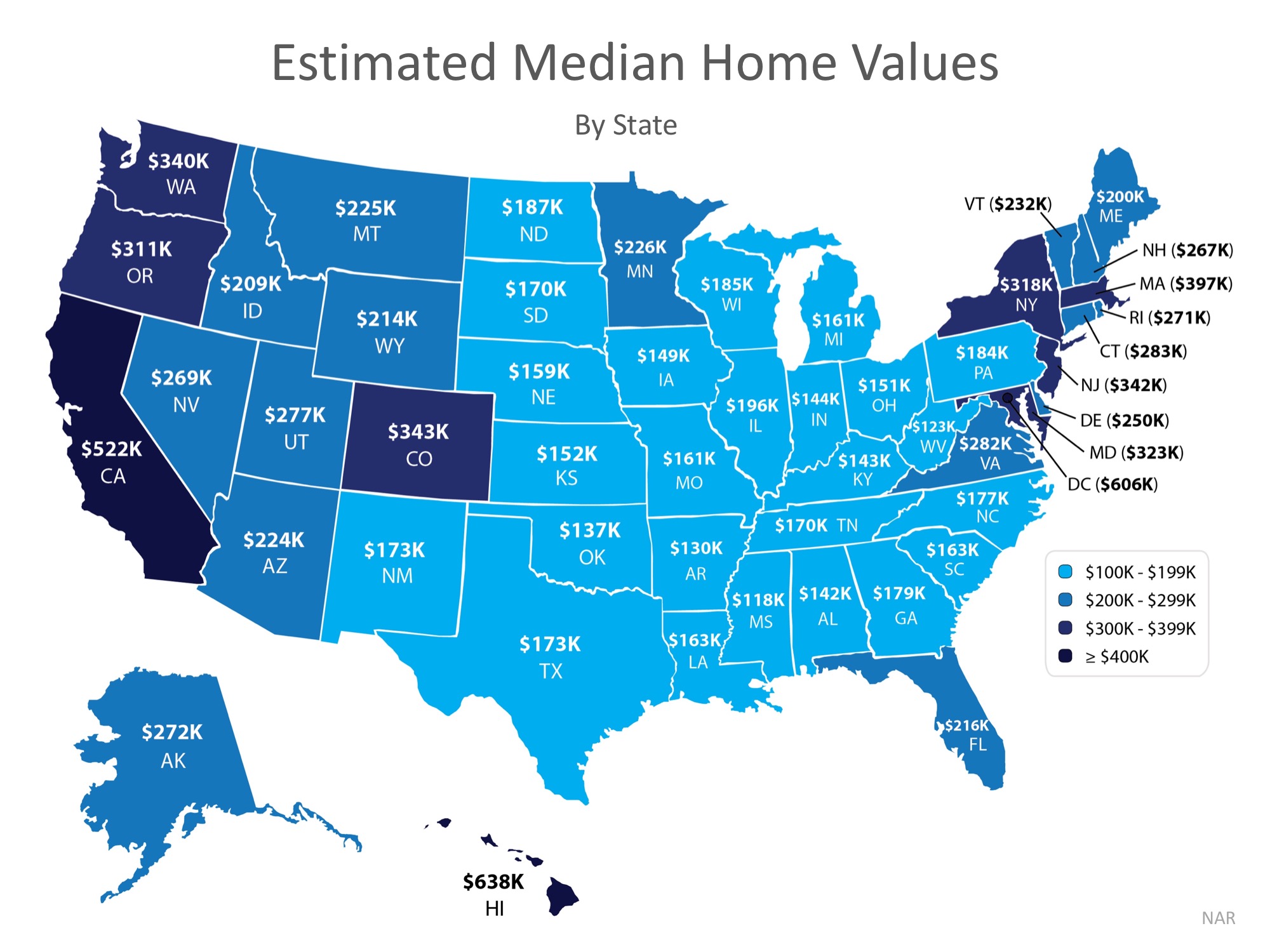
In today’s housing market where home prices are appreciating quickly, it’s important to know that not every home appreciates at the same rate. The map below demonstrates that point on a state-by-state basis using data from the National Association of Realtors.

What’s the Median Home Value in Your State? | Simplifying The Market

Demand often dictates value, even for houses in the same area of the country! High demand for starter and trade-up homes have driven prices up in these categories by nearly 10% over the past year, while those in the premium markets have appreciated at closer to 6%.

Bottom Line

If you are debating whether or not to buy and/or sell a home this year, let’s get together to help you figure out exactly what’s going on in our market.

Powered by WPeMatico

Read more

Are You Wondering If You Can Buy Your First Home?

Are You Wondering If You Can Buy Your First Home? | Simplifying The Market

There are many people sitting on the sidelines trying to decide if they should purchase a home or sign a rental lease. Some might wonder if it makes sense to purchase a house before they get married or start a family, some might think they are too young, and still, some others might think their current incomes would never enable them to qualify for a mortgage.

We want to share what the typical first-time homebuyer actually looks like based on the National Association of Realtors’ most recent Profile of Home Buyers & Sellers. Here are some interesting revelations on the first-time buyer:

Are You Wondering If You Can Buy Your First Home? | Simplifying The Market

Bottom Line

You may not be much different than many people who have already purchased their first homes. Let’s meet to determine if your dream home is within your grasp today.

Powered by WPeMatico

Read more

You DO NOT Need 20% Down to Buy Your Home NOW!

You DO NOT Need 20% Down to Buy Your Home NOW! | Simplifying The Market

The Aspiring Home Buyers Profile from the National Association of Realtors (NAR) found that the American public is still somewhat confused about what is required to qualify for a home mortgage loan in today’s housing market. The results of the survey show that the main reason why non-homeowners do not own their own homes is because they believe that they cannot afford them.

This brings us to two major misconceptions that we want to address today.

1. Down Payment

A recent survey by Laurel Road, the National Online Lender and FDIC-Insured Bank, revealed that consumers overestimate the down payment funds needed to qualify for a home loan.

According to the survey, 53% of Americans who plan to buy or have already bought a home admit to their concerns about their ability to afford a home in the current market. In addition, 46% are currently unfamiliar with alternative down payment options, and 46% of millennials do not feel confident that they could currently afford a 20% down payment.

What these people don’t realize, however, is that there are many loans written with down payments of 3% or less.

Many renters may actually be able to enter the housing market sooner than they ever imagined with new programs that have emerged allowing less cash out of pocket.

2. FICO®Scores

An Ipsos survey revealed that 62% of respondents believe they need excellent credit to buy a home, with 43% thinking a “good credit score” is over 780. In actuality, the average FICO® scores for approved conventional and FHA mortgages are much lower.

The average conventional loan closed in May had a credit score of 753, while FHA mortgages closed with an average score of 676. The average across all loans closed in May was 724. The chart below shows the distribution of FICO® Scores for all loans approved in May.

You DO NOT Need 20% Down to Buy Your Home NOW! | Simplifying The Market

Bottom Line

If you are a prospective buyer who is ‘ready’ and ‘willing’ to act now, but you are not sure if you are ‘able’ to, let’s sit down to help you understand your true options today.

Powered by WPeMatico

Read more

4 Reasons to Sell This Summer [INFOGRAPHIC]

4 Reasons to Sell This Summer [INFOGRAPHIC] | Simplifying The Market


Some Highlights:

  • Buyer demand continues to outpace the supply of homes for sale which means that buyers are often competing with one another for the few listings that are available!
  • Housing inventory is still under the 6-month supply needed to sustain a normal housing market.
  • Perhaps the time has come for you and your family to move on and start living the life you desire.

Powered by WPeMatico

Read more

Homes are More Affordable in 44 out of 50 States

Homes are More Affordable in 44 out of 50 States | Simplifying The Market

With both home prices and mortgage rates increasing this year, many are concerned about a family’s ability to purchase a major part of the American Dream – its own home. However, if we compare housing affordability today to the average affordability prior to the housing boom and bust, we are in much better shape than most believe.

In Black Knight’s latest monthly Mortgage Monitor, they revealed that in the vast majority of the country, it is actually more affordable to purchase a home today than it was between 1995 to 2003 when looking at mortgage payments (determined by price and interest rate) as compared to incomes. Home prices are up compared to 1995-2003, but mortgage rates are still much lower now than at that time. Today, they stand at about 4.5%. Here are the average mortgage rates for each of the years mentioned:

  • 1995 – 7.93%
  • 1996 – 7.81%
  • 1997 – 7.6%
  • 1998 – 6.94%
  • 1999 – 7.44%
  • 2000 – 8.05%
  • 2001 – 6.97%
  • 2002 – 6.54%
  • 2003 – 5.83%

On the other hand, wages have risen over the last twenty years.

Black Knight’s research revealed that, when comparing “the share of median income required to buy the median-priced home” today, to the average between 1995 to 2003, it is currently more affordable to purchase a home in 44 of 50 states.

Here is a state map of the percentage change in the price-to-payment ratio. Positive numbers indicate that it is less affordable to buy while negative numbers indicate that it is more affordable.

Homes are More Affordable in 44 out of 50 States | Simplifying The Market

Bottom Line

Whether you are moving up to the home of your dreams or purchasing your first house, it is a great time to buy when looking at historic affordability data.

Powered by WPeMatico

Read more

3 Issues Facing Today’s Real Estate Market

3 Issues Facing Today’s Real Estate Market | Simplifying The Market

Last week, the National Association of Real Estate Editors (NAREE) held their 52nd Annual Journalism Conference in Las Vegas, NV. Among the many highly anticipated sessions was one called “Top Ten Issues Affecting Real Estate™,” given by Joseph Nahas, Jr., Chair of the Counselors of Real Estate & Senior Vice President of Equus Capital Partners. 

The Counselors of Real Estate (CRE) “is an international organization of high profile property professionals which include principals of prominent real estate, financial, legal, and accounting firms as well as recognized leaders of government and academia.” 

Their annual “top 10” list spans any and all issues that could have an impact on the real estate market. This year, the list was broken up into “Current” and “Long-Term Issues.”

Today we’re going to focus on three of the five “Current” issues with a brief explanation of their impacts on the housing market today!

E-Commerce & Logistics

With promises of 2-day shipping no matter where you live, we are benefiting more now than ever before from the speed and ease-of-use of online retailers like Amazon. These e-retailers haven’t changed whether or not we buy certain items, but rather HOW we buy them!

Many traditional malls or big-box stores are being repurposed as warehouses or distribution centers for online retailers so that they can get their products out faster.

A Look to the Future: “Developers who are including experiences into their locations are the ones who will succeed. It’s about the experience and gaining something over just going to buy a product.”

Generational Change & Demographics

By now we’ve all heard that the millennial generation is the largest yet, just by sheer volume. The largest group of millennials turns 30 years-old in 2020. The average first-time homebuying age is between 30 and 32, depending on marital status. Real estate professionals will be inundated with more and more buyers as the years roll on. Nahas commented on this in his presentation, saying that,

“Too many developers have become dependent on making decisions based on baby boomer’s preferences.

The 75 million millennials are coming, and they will influence real estate and commerce even faster than the baby boomers in the 50s and 60s.”

Interest Rates & the Economy

The interest rate that you secure for your mortgage is a big factor in your monthly housing cost and in how much you ultimately pay for your home. According to Freddie Mac’s Primary Mortgage Market Survey, rates rose to 4.62% on a 30-year fixed rate loan last week.

The Federal Reserve also raised the federal funds rate for the second time this year. If unemployment continues to be at or near record lows, two more hikes are likely to come later this year.

Nahas added,

“Rising rates can be good and bad for the economy. Bad for borrowing money with additional costs, but good to control inflation and help grow the economy at a moderate pace.”

Bottom Line

If you are planning on buying and/or selling a home this year, let’s get together to help you navigate the conditions in your market and set you up for success.

Powered by WPeMatico

Read more

How A Lack of Inventory Impacts the Housing Market

The housing crisis is finally in the rear-view mirror as the real estate market moves down the road to a complete recovery. Home values are up, home sales are up, and distressed sales (foreclosures and short sales) have fallen to their lowest points in years. The market will continue to strengthen in 2018.

However, there is one thing that may cause the industry to tap the brakes: a lack of housing inventory. Buyer demand naturally increases during the summer months, but supply is not keeping up.

Here are the thoughts of a few industry experts on the subject:

Lawrence Yun, Chief Economist at National Association of Realtors

“The worsening inventory crunch through the first three months of the year inflicted even more upward pressure on home prices in a majority of markets. Following the same trend over the last couple of years, a strengthening job market and income gains are not being met by meaningful sales gains because of unrelenting supply and affordability headwinds.”

Sam Khater, Chief Economist for Freddie Mac

“As we head into late spring, the demand for purchase credit remains rock solid, which should set us up for another robust summer home sales season. While this year’s high rates – up 50 basic points from a year ago – have put pressure on the budgets of some home shoppers, weak inventory levels are what’s keeping the housing market from a stronger sales pace.”

Javier Vivas, Director of Economic Research for Realtor.com

“The dynamics of increased competition and buyer frustration are unlikely to change…In fact, the direction of the trend is pointing to a growing mismatch between the pool of prospective buyers and existing inventory.”

Bottom Line

If you are thinking of selling, now may be the time. Demand for your house will be strong at a time when there is very little competition. That could lead to a quick sale for a really good price.

Powered by WPeMatico

Read more

Top 4 Home Renovations for Max ROI [INFOGRAPHIC]

Top 4 Home Renovations for Max ROI [INFOGRAPHIC] | Simplifying The Market

Top 4 Home Renovations for Max ROI [INFOGRAPHIC] | Simplifying The Market

Some Highlights:

  • Whether you are selling your home, just purchased your first home or are a homeowner planning to stay put for a while, there is value in knowing which home improvement projects will net you the most Return On Investment (ROI).
  • Minor bathroom renovations can go a long way toward improving the quality of your everyday life and/or impressing potential buyers.
  • Upgrading your landscaping or curb appeal helps get buyers in the door. These upgrades rank as the 2nd and 4th renovations for returns on investment.

Powered by WPeMatico

Read more

Are Lending Standards Too Loose…or Too Tight?

Are Lending Standards Too Loose…or Too Tight? | Simplifying The Market

With home values appreciating at record rates, some are concerned that we may be heading for another housing bubble like the one we experienced a decade ago. One of the major culprits of that housing boom and bust was the loosening of standards for mortgage credit.

In a study done at the University of North Carolina immediately after the crisis, it was revealed that:

“Lenders began originating large numbers of high risk mortgages from around 2004 to 2007, and loans from those vintage years exhibited higher default rates than loans made either before or after.”

A study by John V Duca, John Muellbauer, and Anthony Murphy concluded that those risky mortgages caused the housing crisis:

“Our findings indicate that swings in credit standards played a major, if not the major, role in driving the recent boom and bust in US house prices.”

How do today’s mortgage standards compare to those from 2004 to 2007?

The Mortgage Bankers’ Association tracts mortgage standards in their Mortgage Credit Availability Index (MCAI). A decline in the MCAI indicates that lending standards are tightening, while increases in the index are indicative of loosening credit. While the chart below shows the index going back to that period between 2004 and 2007 when loose standards caused the housing bubble, we can see that, though the index has risen slightly over the last several years, we are nowhere near the standards that precipitated the housing crisis.

Are Lending Standards Too Loose…or Too Tight? | Simplifying The Market

Bottom Line

If anything, standards today are too tight and are preventing some qualified buyers from getting the mortgage credit they deserve.

Powered by WPeMatico

Read more

Parents Say Kids’ Opinions Matter Big When Buying a Home

Parents Say Kids’ Opinions Matter Big When Buying a Home | Simplifying The Market

A recent survey conducted by Harris Poll and released by SunTrust Mortgage found that “55% of homeowners with a child under the age of 18 at the time when they purchased their home said that the opinion of their offspring played a major role in their home buying decision.”

When the results were broken down by the parent’s age, millennials (those 18-36) led the way with 74% of homeowners saying that their child’s opinion was a factor in choosing which home to buy. Eighty-three percent of renters believe that their child’s opinion would be a deciding factor when looking to purchase a home.

So what features in a home are most important to kids?

Parents Say Kids’ Opinions Matter Big When Buying a Home | Simplifying The Market

Coming in at 57%, it should come as no surprise that gaining their own bedrooms was the top most-desirable feature of any home for kids, followed by a large back yard to play in at 34%.

Todd Chamberlain, Head of Mortgage Banking at SunTrust explained the reasoning behind the survey,

“As a parent of two kids, I know from experience that including children in the home buying process is not only fun for the whole family, but also educational for our homebuyers of tomorrow.”

Bottom Line

If you’re thinking about selling your home this year, make sure to highlight all the kid-friendly features your home has to offer so that you can sway the real decision makers.

Powered by WPeMatico

Read more

When Is a Good Time to Rent? Not Now!

When Is a Good Time to Rent? Not Now! | Simplifying The Market

People often ask if now is a good time to buy a home, but nobody ever asks whether or not it’s a good time to rent. Regardless, we want to make certain that everyone understands that now is NOT a good time to rent.

The Census Bureau recently released their 2018 first quarter median rent numbers. According to their report, here is a graph showing rent increases from 1988 until today:


When Is a Good Time to Rent? Not Now! | Simplifying The Market

As you can see, rents have steadily increased and are showing no signs of slowing down. If you are faced with making the decision of whether or not you should renew your lease, you might be pleasantly surprised at your ability to buy a home of your own instead.

Bottom Line

One way to protect yourself from rising rents is to lock in your housing expense by buying a home. If you are ready and willing to buy, let’s meet to determine if you are able to today!

Powered by WPeMatico

Read more

Days on The Market Drops to New Low in April

Days on The Market Drops to New Low in April | Simplifying The Market

According to recently released data from the National Association of Realtors (NAR), the median number of days that a home spent on the market hit a new low of 26 days in April, as 57% of homes were on the market for under a month.

NAR’s Chief Economist, Lawrence Yun, had this to say,

“What is available for sale is going under contract at a rapid pace. Since NAR began tracking this data in May 2011, the median days a listing was on the market was at an all-time low in April, and the share of homes sold in less than a month was at an all-time high.”

Strong buyer demand, a good economy, and a low inventory of new and existing homes for sale created the perfect storm to accelerate the time between listing and signing a contract.

The chart below shows the median days on the market from April 2017 to April 2018:

Days on The Market Drops to New Low in April | Simplifying The Market

Bottom Line

If you are a homeowner who is debating whether or not to list your home for sale, know that national market conditions are primed for a quick turnaround! Let’s get together to discuss exactly what’s going on in our area, today!

Powered by WPeMatico

Read more

The Cost of Renting vs. Buying [INFOGRAPHIC]

The Cost of Renting vs. Buying [INFOGRAPHIC] | Simplifying The Market

The Cost of Renting vs. Buying [INFOGRAPHIC] | Simplifying The Market

Some Highlights:

  • Historically, the choice between renting or buying a home has been a tough decision.
  • Looking at the percentage of income needed to rent a median-priced home today (28.8%) vs. the percentage needed to buy a median-priced home (17.1%), the choice becomes obvious.
  • Every market is different. Before you renew your lease again, find out if you can put your housing costs to work by buying this year!

Powered by WPeMatico

Read more

Did Tax Reform Kill the Luxury Market? NOT SO FAR!

Did Tax Reform Kill the Luxury Market? NOT SO FAR! | Simplifying The Market

The new tax code limits the deduction of state and local property taxes, as well as income or sales taxes, to a total of $10,000. When the tax reform legislation was put into law at the beginning of the year, some experts felt that it could have a negative impact on the luxury housing market.

Capital Economics:

“The impact on expensive homes could be detrimental, with a limit on the MID raising taxes for those that itemize.”

Mark Zandi of Moody’s Analytics:

“The impact on house prices is much greater for higher-priced homes, especially in parts of the country where incomes are higher and there are thus a disproportionate number of itemizers, and where homeowners have big mortgages and property tax bills.”

The National Association of Realtors (NAR) predicted price declines in “high cost, higher tax areas” because of the tax changes. They forecasted a depreciation of 6.2% in New Jersey and 4.8% in Washington D.C. and New York.

What has actually happened?

Here are a few metrics to consider before we write-off the luxury market:

1. According to NAR’s latest Existing Home Sales Report, here is the percent change in sales from last year:

  • Homes sales between $500,000 – $750,000 are up 11.9%
  • Homes sales between $750,000 – $1M are up 16.8%
  • Homes sales over $1,000,000 are up 26.7%

2. In a report from Trulia, it was revealed that searches for “premium” homes as a percentage of all searches increased from 38.4% in the fourth quarter of 2017 to 41.4% in the first quarter of 2018.

3. According to an article from Bloomberg:

“Median home values nationally rose 8 percent in March compared with a year earlier, while neighborhoods of San Francisco and San Jose, California, have increased more than 25 percent.

Prices in affluent areas in Delaware and New York, such as the Hamptons, also surged more than 20 percent.”

Bottom Line

Aaron Terrazas, Zillow’s Senior Economist, probably summed up real estate’s luxury market the best:

“We are seeing the opposite of what was expected. We have certainly not seen the doomsday predictions play out.”

Powered by WPeMatico

Read more

Homeowners & Appraisers See the Most Eye-to-Eye on Price in 3 Years

Homeowners & Appraisers See the Most Eye-to-Eye on Price in 3 Years | Simplifying The Market

In today’s housing market, where supply is very low and demand is very high, home values are increasing rapidly. Many experts are projecting that home values could appreciate by another 5% (or more) over the next twelve months. One major challenge in such a market is the bank appraisal.

When prices are surging, it is difficult for appraisers to find adequate, comparable sales (similar houses in the same neighborhood that recently closed) to defend the selling price when performing the appraisal for the bank.

Every month in their Home Price Perception Index (HPPI), Quicken Loans measures the disparity between what a homeowner who is seeking to refinance their home believes their house is worth and what an appraiser’s evaluation of that same home is.

March 2015 marked the first month of a three-year gap between what an appraiser and a homeowner believed a home was worth. That gap widened to 2.65% in September 2015 and had consistently hovered between 1.0% and 2.0% through November 2017.

The chart below illustrates the changes in home price estimates over the last three years:

Homeowners & Appraisers See the Most Eye-to-Eye on Price in 3 Years | Simplifying The Market

In the latest release, the disparity was the narrowest it has been since March 2015, as the gap between appraisers and homeowners was only -0.33%. This is important for homeowners to note as even a .33% difference in appraisal could equate to thousands of dollars that a buyer or seller has to come up with at closing (depending on the price of the home).

Bill Banfield, Executive VP of Capital Markets at Quicken Loans urges homeowners to find out how their local markets have been impacted by supply and demand: 

“The appraisal is one of the most important, although sometimes least predictable, parts of the mortgage process. The Home Price Perception Index is a way to illustrate the differences of opinion, and these differences affect everything from the type of mortgage a borrower can get to the expectations a seller has about the proceeds available upon sale of their home.”

Bottom Line

Every house on the market must be sold twice; once to a prospective buyer and then again to the bank (through the bank’s appraisal). With escalating prices, the second sale may be even more difficult than the first. If you are planning on entering the housing market this year, let’s get together to discuss this and any other obstacles that may arise.

Powered by WPeMatico

Read more

4 Steps to Follow When Presenting an Offer in Today’s Market!

4 Steps to Follow When Presenting an Offer in Today’s Market! | Simplifying The Market

So, you’ve been searching for that perfect house to call a ‘home,’ and you’ve finally found it! The price is right, and in such a competitive market, you want to make sure that you make a great offer so that you can guarantee that your dream of making this house yours comes true!

Below are 4 steps provided by Freddie Mac to help buyers make offers, along with some additional information for your consideration:

1. Determine Your Price

“You’ve found the perfect home and you’re ready to buy. Now what? Your real estate agent will be by your side, helping you determine an offer price that is fair.”

Based on your agent’s experience and key considerations (like similar homes recently sold in the same neighborhood or the condition of the house and what you can afford), your agent will help you to determine the offer that you are going to present.

Getting pre-approved will not only show home-sellers that you are serious about buying, but it will also allow you to make your offer with confidence because you’ll know that you have already been approved for a mortgage in that amount.

2. Submit an Offer

“Once you’ve determined your price, your agent will draw up an offer, or purchase agreement, to submit to the seller’s real estate agent. This offer will include the purchase price and terms and conditions of the purchase.”

Talk with your agent to find out if there are any ways in which you can make your offer stand out in this competitive market! A licensed real estate agent who is active in the neighborhoods you are considering will be instrumental in helping you put in a solid offer.

3. Negotiate the Offer

“Oftentimes, the seller will counter the offer, typically asking for a higher purchase price or to adjust the closing date. In these cases, the seller’s agent will submit a counteroffer to your agent, detailing their desired changes, at this time, you can either accept the offer or decide if you want to counter.

Each time changes are made through a counteroffer, you or the seller have the option to accept, reject or counter it again. The contract is considered final when both parties sign the written offer.”

If your offer is approved, Freddie Mac urges you to “always get an independent home inspection, so you know the true condition of the home.” If the inspector uncovers undisclosed problems or issues, you can discuss any repairs that may need to be made with the seller or even cancel the contract altogether.

4. Act Fast

The inventory of homes listed for sale has remained well below the 6-month supply that is needed for a ‘normal’ market. Buyer demand has continued to outpace the supply of homes for sale, causing buyers to compete with each other for their dream homes.

Make sure that as soon as you decide that you want to make an offer, you work with your agent to present it as quickly as possible.

Bottom Line 

Whether buying your first home or your fifth, having a local real estate professional who is an expert in his or her market on your side is your best in making sure the process goes smoothly. Let’s talk about how we can make your dreams of homeownership a reality!

Powered by WPeMatico

Read more

4 Reasons Why Summer Is a Great Time to Buy a Home!

4 Reasons Why Summer Is a Great Time to Buy a Home! | Simplifying The Market

Here are four great reasons to consider buying a home today instead of waiting.

1. Prices Will Continue to Rise

CoreLogic’s latest Home Price Insights reports that home prices have appreciated by 7% over the last 12 months. The same report predicts that prices will continue to increase at a rate of 5.2% over the next year.

Home values will continue to appreciate for years. Waiting no longer makes sense.

2. Mortgage Interest Rates Are Projected to Increase

Freddie Mac’s Primary Mortgage Market Survey shows that interest rates for a 30-year mortgage have increased by half a percentage point already in 2018 to around 4.5%. Most experts predict that rates will rise over the next 12 months. The Mortgage Bankers Association, Fannie Mae, Freddie Mac and the National Association of Realtors are in unison, projecting that rates will increase by nearly a full percentage point by this time next year.

An increase in rates will impact YOUR monthly mortgage payment. A year from now, your housing expense will increase if a mortgage is necessary to buy your next home.

3. Either Way, You Are Paying a Mortgage

There are some renters who have not yet purchased a home because they are uncomfortable taking on the obligation of a mortgage. Everyone should realize that unless you are living with your parents rent-free, you are paying a mortgage – either yours or your landlord’s.

As an owner, your mortgage payment is a form of ‘forced savings’ that allows you to have equity in your home that you can tap into later in life. As a renter, you guarantee your landlord is the person with that equity.

Are you ready to put your housing cost to work for you?

4. It’s Time to Move on with Your Life

The ‘cost’ of a home is determined by two major components: the price of the home and the current mortgage rate. It appears that both are on the rise.

But what if they weren’t? Would you wait?

Look at the actual reason you are buying and decide if it is worth waiting. Whether you want to have a great place for your children to grow up, you want your family to be safer, or you just want to have control over renovations, maybe now is the time to buy.

If the right thing for you and your family is to purchase a home this year, buying sooner rather than later could lead to substantial savings.

Powered by WPeMatico

Read more

The given key was not present in the dictionary.

Server Error in '/' Application.

The given key was not present in the dictionary.

Description: An unhandled exception occurred during the execution of the current web request. Please review the stack trace for more information about the error and where it originated in the code.

Exception Details: System.Collections.Generic.KeyNotFoundException: The given key was not present in the dictionary.

Source Error:

An unhandled exception was generated during the execution of the current web request. Information regarding the origin and location of the exception can be identified using the exception stack trace below.

Stack Trace:


[KeyNotFoundException: The given key was not present in the dictionary.]
   System.ThrowHelper.ThrowKeyNotFoundException() +39
   System.Collections.Generic.Dictionary`2.get_Item(TKey key) +52
   DiverseSolutions.Beast.API.Controllers.APIController.Disclaimer(DisclaimerResponseDirective responseDirective) in c:\jenkins\workspace\Diverse_DotNet_Jobs\beast-api\beast-api\App\Controllers\Disclaimer.cs:38
   lambda_method(Closure , ControllerBase , Object[] ) +139
   System.Web.Mvc.ReflectedActionDescriptor.Execute(ControllerContext controllerContext, IDictionary`2 parameters) +279
   System.Web.Mvc.ControllerActionInvoker.InvokeActionMethod(ControllerContext controllerContext, ActionDescriptor actionDescriptor, IDictionary`2 parameters) +35
   System.Web.Mvc.<>c__DisplayClass15.<InvokeActionMethodWithFilters>b__12() +80
   System.Web.Mvc.ControllerActionInvoker.InvokeActionMethodFilter(IActionFilter filter, ActionExecutingContext preContext, Func`1 continuation) +474
   System.Web.Mvc.ControllerActionInvoker.InvokeActionMethodFilter(IActionFilter filter, ActionExecutingContext preContext, Func`1 continuation) +474
   System.Web.Mvc.ControllerActionInvoker.InvokeActionMethodFilter(IActionFilter filter, ActionExecutingContext preContext, Func`1 continuation) +474
   System.Web.Mvc.ControllerActionInvoker.InvokeAction(ControllerContext controllerContext, String actionName) +1418
   System.Web.Mvc.Controller.ExecuteCore() +113
   System.Web.Mvc.ControllerBase.Execute(RequestContext requestContext) +91
   System.Web.Mvc.<>c__DisplayClassb.<BeginProcessRequest>b__5() +68
   System.Web.Mvc.Async.<>c__DisplayClass1.<MakeVoidDelegate>b__0() +25
   System.Web.Mvc.Async.AsyncResultWrapper.End(IAsyncResult asyncResult, Object tag) +10
   System.Web.CallHandlerExecutionStep.System.Web.HttpApplication.IExecutionStep.Execute() +1837
   System.Web.HttpApplication.ExecuteStepImpl(IExecutionStep step) +220
   System.Web.HttpApplication.ExecuteStep(IExecutionStep step, Boolean& completedSynchronously) +599


Version Information: Microsoft .NET Framework Version:4.0.30319; ASP.NET Version:4.8.4676.0